Trinidad and Tobago Guide
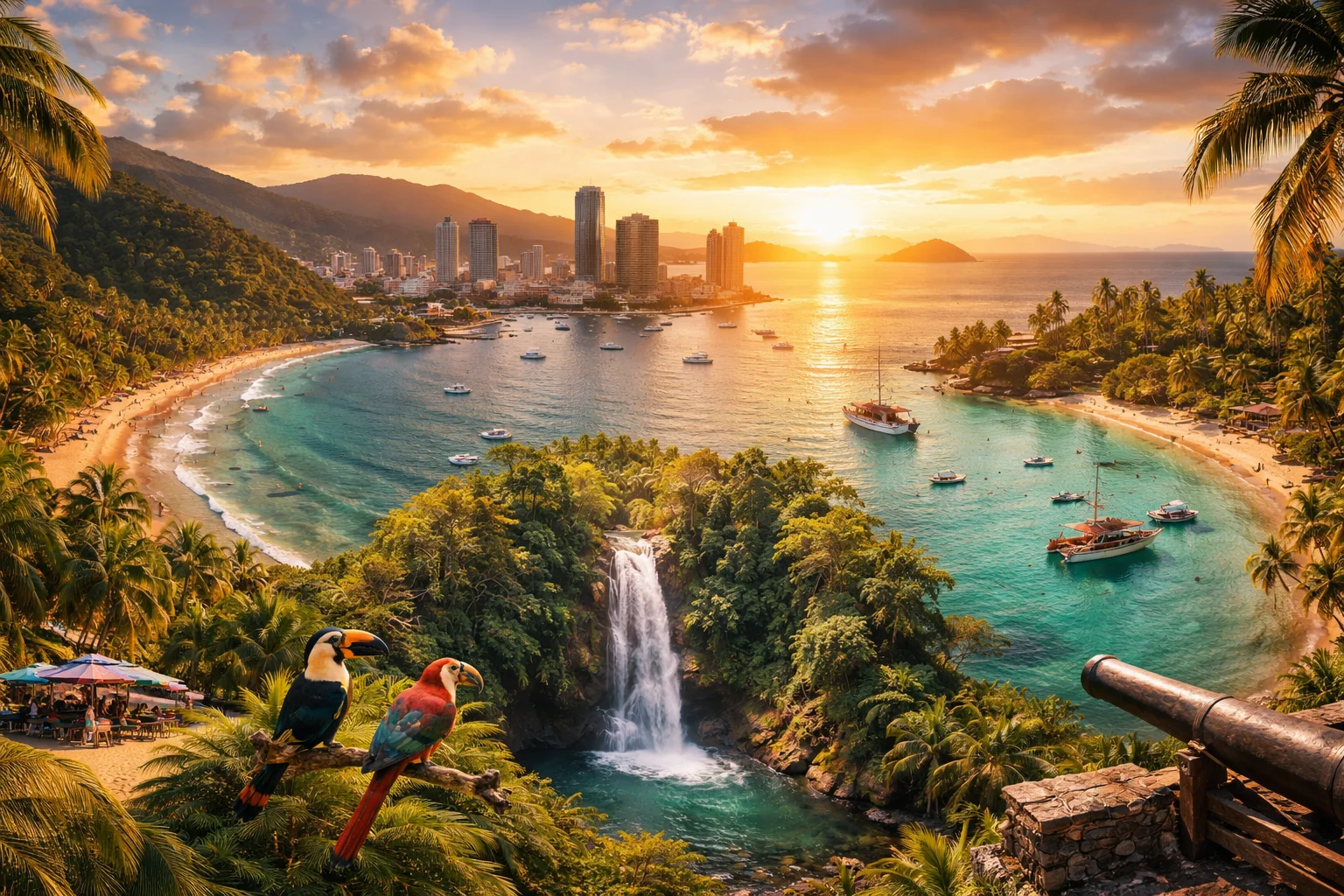
Trinidad and Tobago overview
Trinidad and Tobago is a twin-island republic in the southern Caribbean, situated just off northeast Venezuela. It pairs industrialized Trinidad with the smaller, tourism-oriented Tobago and is defined by a concentrated mix of energy production and cultural export. The country is notable for a combination of large-scale gas-based industry and globally influential festival traditions that have shaped diasporic communities. Compact territory and a high degree of urban-industrial concentration produce an economy and cultural scene that punch above their geographic weight in the region.
Common Geography Questions About Trinidad and Tobago
Where Trinidad and Tobago is located
Trinidad and Tobago’s geography places the twin islands at the southern edge of the Caribbean Sea, on the continental shelf of South America, roughly near 10°N latitude and 61°W longitude. The islands lie north of Venezuela and east of the Gulf of Paria: Trinidad faces the narrow maritime channel separating it from the South American mainland, while Tobago fronts the open Atlantic. At the southern end of the Caribbean island chain, Trinidad and Tobago is biogeographically and hydrographically linked to mainland South America rather than to the Greater Antilles farther north.
Geography and landscape of Trinidad and Tobago
Trinidad and Tobago’s terrain compresses mountains, plains and coral coasts into a small area: Trinidad includes the limestone-and-schist Northern Range with peaks like El Cerro del Aripo, extensive alluvial plains crossed by the Caroni and Ortoire rivers, and seasonally flooded mangrove belts. Tobago is dominated by the Main Ridge, an uplifted spine whose rainforest reserve was legally protected in 1776 — among the earliest conservation decrees worldwide. Coastal coral reefs, seaward-facing cliffs on Tobago and sedimentary basins beneath Trinidad that host hydrocarbons create sharply differentiated landforms between the two islands.
Trinidad and Tobago culture and society
English is the official language, while everyday speech mixes Trinidadian and Tobagonian Creoles with lexical layers from Spanish, Portuguese and South Asian languages. Religious life is plural: Christianity, Hinduism and Islam coexist alongside Afro-Caribbean rituals and syncretic practices. Social customs reflect a history of African enslavement and Indian indenture; culinary hybrids like doubles and pelau and musical forms rooted in Afro-Indian contact shape daily life. A particular social-political accommodation is visible in the formal recognition of the Spiritual Baptist faith with its own public holiday, a legal arrangement uncommon among countries of comparable size.
History of Trinidad and Tobago
Indigenous Arawak and Carib peoples originally occupied the islands; Trinidad’s proximity to the South American mainland sustained ecological and cultural ties before European arrival. European powers contested Tobago repeatedly, and that island passed through multiple colonial hands far more times than typical Caribbean territories, producing a patchwork of colonial legacies. Spain formally claimed Trinidad but Britain established control in the early 19th century. Post-emancipation labor systems brought large numbers of Indian indentured workers, transforming demographics. The rise of commercial oil and natural gas in the 20th century reshaped the economic base and underpinned the post-colonial state that emerged in the 1960s.
Trinidad and Tobago economy and government
Trinidad and Tobago is a unitary parliamentary republic with a largely ceremonial President, an executive Prime Minister and a bicameral legislature composed of an elected House of Representatives (41 members) and an appointed Senate. The economy is dominated by hydrocarbons and associated petrochemical activity: natural gas underwrites major ammonia, methanol and power-generation complexes concentrated at industrial hubs such as Point Lisas on Trinidad’s west coast. Tobago’s economy is more tourism- and fisheries-oriented. The national currency is the Trinidad and Tobago dollar (TTD), and state participation in energy and utilities creates macroeconomic sensitivity to global commodity cycles.
Regions and major cities of Trinidad and Tobago
Administratively, Trinidad and Tobago combines municipal and regional corporations on Trinidad with a distinct Tobago House of Assembly responsible for devolved local governance. The capital, Port of Spain, hosts national institutions and financial services; San Fernando functions as an industrial and energy-sector center; Chaguanas has grown into a central commercial hub in Trinidad’s interior. Scarborough is Tobago’s principal town and service center. Geographically the country divides into recognizable zones: the Northern Range and adjacent highlands, the Caroni and south-central plains, an industrialized west coast, and Tobago’s windward and leeward coastal environments with markedly different development patterns.
Distinctive characteristics of Trinidad and Tobago
Trinidad and Tobago’s global reputation rests on concrete cultural and individual achievements: it is the birthplace of Nobel laureate V. S. Naipaul and of cricket great Brian Lara, linking the islands to major international cultural and sporting narratives. Trinidadian carnival traditions and migrant communities played a central role in creating London’s Notting Hill Carnival, exporting specific festival practices and event organization. The country’s compact combination of a deep petrochemical complex and a highly visible cultural export profile creates a distinctive dual identity—industrial energy supplier at home and disproportionate cultural influencer abroad.